Education

Mandatory CCTV Cameras in All CBSE Schools
Mandatory CCTV Cameras in All CBSE Schools The Central Board of Secondary Education (CBSE) has recently mandated the installation of high-definition CCTV cameras with real-time audio-visual recording at all CBSE-affiliated schools to strengthen student safety and campus security Key Details for Students and Parents CCTV Coverage: Cameras must be installed at: Entry and exit points Corridors and staircases Classrooms Laboratories Libraries Canteen, storerooms, playgrounds, and other common areas Toilets and washrooms are excluded to protect student privacy Data Retention: All recorded footage will be stored for at least 15 days and must be accessible to authorities if required Maintenance: Schools are responsible for regular maintenance and effective monitoring of all CCTV equipment to ensure constant surveillance Purpose: This measure aims to prevent bullying, abuse, violence, and other threats, promoting a safe environment for every student New Board Exam Structure for Class 10 – Effective 2026 Board Exams Twice a Year CBSE has announced that Class 10 board exams will now be organized in two phases starting 2026. Two Exam Chances:All students must take the first exam, while the second is optional—those who wish to improve their scores or missed the first can appear in the second attempt. Why This Change? The decision is designed to reduce exam-related stress, offer students a better chance to perform, and support continuous learning and assessment. CBSE Supplementary Exams 2025 Admit Cards: Admit cards for Class 10 and Class 12 supplementary exams have been released. Exam Dates: Class 12: Supplementary exam is scheduled for July 15 Class 10: Supplementary exams will be held from July 15 to July 22 These exams are a second opportunity for students to clear their subjects and avoid losing a year. Artificial Intelligence (AI) in Schools AI as a Subject: Over 4,500 CBSE schools now offer Artificial Intelligence as an elective in Class 9, reflecting CBSE’s focus on preparing students for the future with emerging tech skills. Support for Open Schooling and Scholarships NIOS Exams: CBSE has directed all schools to fully support NIOS (National Institute of Open Schooling) exams, held twice a year for Class 10 and Class 12 students. Scholarship Scheme: Eligible students are encouraged to apply for the Central Sector Scholarship scheme for financial aid in higher education. For School Officials Superintendent Answer Key: The Superintendent (Tier 2) Answer Key is available for download on the official CBSE website. Summary for Classes 6–10: Students and parents should note that CBSE schools are significantly enhancing safety through CCTV, the board exam process will soon be more flexible for Class 10, and there are ongoing efforts to introduce modern subjects and support alternate pathways like open schooling. Schools are instructed to comply with all new guidelines promptly, prioritizing student well-being and academic success
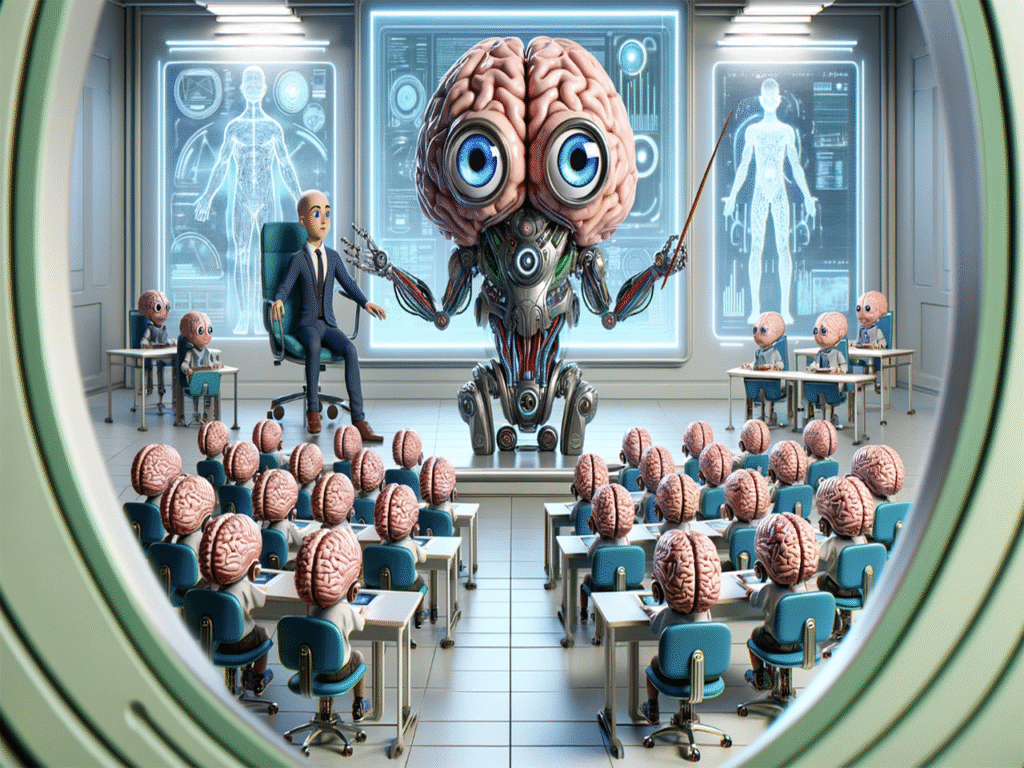
Brain and Body Development of Children
Brain and Body Development of Children: Foundation for Lifelong Learning The brain and body development of children forms the foundation for their entire lives. These crucial early years set the stage not only for health and physical growth but also for cognitive, emotional, and social skills necessary to thrive in school and beyond. As parents explore options like education & tuition, understanding these fundamental growth patterns is essential for making the right choices for their children’s future. How Brain Development Unfolds in Childhood The Miracle of Early Growth By age 5, a child’s brain is already 90% developed. This extraordinary pace illustrates why the first years are so precious—a period when every experience, interaction, and lesson can shape brain architecture for life. Key Stages of Cognitive Development Jean Piaget, one of the most influential psychologists, outlined four critical phases: Sensorimotor Stage (0–2 years): Babies explore with their senses and basic movements. Activities like touching, grabbing, and listening help neurons to connect and lay the basics for later learning Preoperational Stage (2–7 years): Children begin to use language, symbols, and imagination, but thinking is still concrete and self-focused. Pretend play takes off—a sign of healthy symbolic thinking By the end of the preoperational stage, most of the physical structure of the brain is formed, and major neural connections are in place Body Development: Physical Milestones in the Early Years Infancy Through Kindergarten Physical growth is closely tied to brain development: Infancy (0–12 months): Babies achieve milestones like sitting, crawling, and standing. Fine motor skills emerge—such as grasping objects and pointing. Toddlerhood (1–3 years): Walking, running, and climbing come next. Children refine coordination, balance, and muscle control. Preschool (3–5 years): Jumping, skipping, and drawing highlight new strength and dexterity. Healthy body development is essential not just for movement, but also for exploring the world—an essential driver of sensory and cognitive growth. Experience Shapes the Brain: Why Early Years Matter The Power of Positive Interactions Children’s brains form over 1 million new neural connections every second in their earliest years. But these connections depend on stimulating experiences: talking, reading, singing, and playing. Responsive caregiving, where loving adults interact and answer a child’s cues, directly boosts brain growth. Role of Environment and Education Nutrition: Proper diet (including nutrients like folic acid) supports both brain and body growth. Malnutrition or exposure to toxins can hinder normal development Engaging Environment: Safe, enriched spaces encourage children to explore, ask questions, and form new connections—all vital for intellectual curiosity. Early Learning through Education & Tuitions: High-quality preschools and educational activities reinforce brain and cognitive growth, providing structured opportunities for children to learn together, solve problems, and build social skills. Supplementary tuitions can further reinforce difficult concepts, laying a stronger cognitive foundation for years to come. How Education & Tuitions Shape Child Development The Classroom’s Role in Brain and Body Growth High-quality Education & Tuitions support both cognitive and physical development: Structured Learning: Class environments introduce children to routines, peer interactions, and age-appropriate challenges. Physical Activities: Schools and tuitions often include sports, dance, and play-based activities—vital for muscle and bone development. Cognitive Challenges: Problem-solving exercises, storytelling, and group projects stimulate higher-order thinking and emotional regulation. Personalized Support Tuitions and educational support can provide: Additional Practice: Reinforcing concepts children find difficult, which helps solidify neural pathways. Custom Learning Plans: Tailored instruction to address unique strengths and weaknesses. Building Confidence: Achievement and positive feedback in a small group help bolster self-esteem, motivation, and resilience. Crucial Domains of Development Communication and Language From babbling and first words to complex sentences, language skills explode in the first five years. These are closely linked with emotional regulation, social skills, and success in school. Education & Tuitions focusing on reading, storytelling, and vocabulary games make crucial contributions to these abilities. Social-Emotional Growth The ability to make friends, cope with frustration, and adapt to new situations depends on early brain development. Group activities in educational settings and tuitions teach cooperation, empathy, and self-control—all essential for future success. Cognitive Skills: Foundation for Life-Long Learning Cognitive skills such as attention, memory, and reasoning, developed through games, puzzles, and structured lessons in both formal education and tuitions, provide children with the tools to learn independently and solve complex problems later in life Physical Growth: Movement and Exploration Children who are active—through play, dance, and sports—develop better coordination, strength, and even improved attention spans. Physical activity complements brain development, helping children focus and process information more effectively. Latest Trends: Popular Google Keywords in Child Development and Education Educational content that includes popular search terms helps more families access high-quality information and resources. In 2025, trending Google keywords include: Early childhood development Education & Tuitions Cognitive development milestones Effective learning at home Child brain growth activities Holistic development for children Best tuitions for kids near me Incorporating these keywords into blog posts and school resources ensures parents can easily find trusted advice on nurturing their child’s brain and body during the most critical windows of growth. Fostering Development: Tips for Parents and Caregivers At Home Talk, read, and sing to your child daily. Encourage imaginative play with toys, stories, and games. Ensure healthy foods and adequate sleep. Limit screen time, especially for very young children. Through Education & Tuition Choose age-appropriate learning activities and ensure tutors use creative, play-based methods for younger children. Select programs that balance academics and physical activities. Monitor progress and stay connected with teachers to encourage holistic growth—brain, body, and heart. Conclusion Understanding the interconnectedness of brain and body development in children empowers families to create rich, nurturing environments—at home and through Education & Tuitions. By providing positive experiences in the early years, we lay the strongest possible foundation for future health, happiness, and achievement.
The New Education Policy (NEP) 2020
The New Education Policy (NEP) 2020 The National Education Policy (NEP) 2025 marks a pivotal moment in the evolution of India’s education system, building on the reforms introduced by NEP 2020. Its aim is to prepare students for a rapidly changing global environment by introducing holistic, flexible, and skill-oriented educational practices, with a strong emphasis on digital integration, vocational training, equity, and accessibility. Key Objectives and Philosophy The NEP 2025 envisions: Holistic and Multidisciplinary Education: Students have increased freedom to choose multidisciplinary subjects and pursue learning in both academic and vocational fields. Skill-Based and Vocational Training: Vocational education begins as early as Class 6, emphasizing practical training and internships to ensure graduates are job-ready. Digital Integration: There is an expansion of online and hybrid learning environments, including the launch of the National Digital University. Equity and Accessibility: The policy targets 100% Gross Enrollment Ratio (GER) in school education by 2030, alongside initiatives to support marginalized groups, differently-abled students, and girls, especially in STEM disciplines. Lifelong Learning and Competency: Focus shifts from rote memorization to developing critical thinking, creativity, problem-solving, and communication skills. Revised School Structure: The 5+3+3+4 Model Replacing the old 10+2 system, NEP 2025 continues with the 5+3+3+4 curricular structure: Foundational Stage (Ages 3–8): Play-based, activity-led learning develops cognitive and social abilities. Preparatory Stage (Ages 8–11): Early formal subjects like math, science, and languages are taught through experiential methods. Middle Stage (Ages 11–14): Focus on critical thinking, practical sciences, coding, and the first exposure to vocational skills. Secondary Stage (Ages 14–18): Multidisciplinary, flexible subject options, allowing mixes such as science with arts or commerce. Instruction in the mother tongue or regional language is mandatory until Class 5, supporting cultural preservation and understanding, with a transition to bilingual learning by Class 8. Major professional courses and entrance exams are now available in more regional languages, broadening accessibility. Core Reforms in NEP 2020 Vocational and Skill-based Learning Integration Vocational Courses from Class 6: Fields include carpentry, plumbing, coding, digital marketing, and agriculture. Internships/Apprenticeships: Mandatory in Classes 11 and 12, giving direct industry experience. Alignment with Skill India Mission: Ensures that curricular content matches national skill development goal Dismissal of the No Detention Policy Students in Classes 5 and 8 must pass year-end exams; those who fail must reappear within two months or repeat the year. This move targets real learning and accountability. Curriculum and Exam Reforms Reduced Content Load: New NCERT curricula for Grades 7, 9, and 11 focus on competency-based instead of memorization-heavy learning. Biannual Board Exams: Classes 10 and 12 take board exams twice a year, with the best score retained, reducing exam pressure and encouraging deep comprehension. Competency-Based Assessments: Questions test conceptual clarity and practical application, not rote recall. Digital-Driven Learning AI-Based Personalized Adaptive Learning (PAL): Digital platforms assess individual progress and provide tailored remedial content. Expansion of Smart Classrooms: By 2027, half of all government schools are to be tech-enabled. Cybersecurity and Data Privacy: New modules introduced in curricula Higher Education Transformation Four-Year Undergraduate Programme (FYUP): Flexible entry and exit—students can earn a certificate (1 year), diploma (2 years), degree (3 years), or a research honors degree (4 years). National Credit Framework (NCrF): Academic, vocational, and extracurricular credits are portable and transferable across institutions and disciplines, encouraging lifelong learning and mobility. Mandatory Common Entrance Test (CUET): Streamlines university admissions at central universities, making the system more transparent and merit-based. Push for Research and STEM: Strengthened National Research Foundation and encouragement for research-based learning at the undergraduate level Inclusion, Accessibility, and Teacher Training Special Education Zones: Established in rural and tribal regions to bridge educational gaps. Assistive Technologies: Adopted for differently-abled learners, ensuring their inclusion. Scholarships and Incentives: Special emphasis on supporting girls and underprivileged students, particularly for entry into STEM and professional courses. Continuous Professional Development for Teachers: Mandatory training every three years under the National Professional Standards for Teachers (NPST); mentorship programs for new educators. Budgetary Support and Implementation Union Budget 2025–26: Total outlay of ₹1,28,650 crore, with ₹78,572 crore for school education and ₹50,077.95 crore for higher education. The PM SHRI Initiative allocates ₹7,500 crore for upgrading over 14,000 schools nationwide1. Anticipated Outcomes and Long-term Vision Quality and Holistic Improvement: Moves away from rote-centric assessments to true understanding, practical skills, and digital fluency. Job Readiness: Enhanced employability due to vocational training and internships. Global Competitiveness: Multidisciplinary education prepares Indian students to compete globally. Social Equity: Focus on reaching marginalized communities, supporting differently-abled learners, and mainstreaming girls in STEM. Teacher Empowerment: Trained, motivated teachers able to deliver modern pedagogy. Challenges and Considerations State-wise Implementation: Progress varies; some regions, like Maharashtra and Karnataka, lead in curriculum rollout, while others lag behind1. Digital Divide: Equity in access to devices and online connectivity remains a critical barrier, especially in rural areas. Teacher Training Demand: Massive upskilling required for millions of teachers to adapt to new pedagogy and technology. Monitoring and Evaluation: Need for robust systems to track outcomes and refine policy in real time. Conclusion The National Education Policy 2020 is structured to transform the Indian education landscape, making it more inclusive, future-ready, and attuned to global benchmarks. By blending foundational literacy with advanced digital and vocational skills, the policy aims to shape generations capable of thriving in diverse, modern careers and contributing to the nation’s progress

CBSE Exam Pattern
CBSE Exam Pattern The Central Board of Secondary Education (CBSE) has implemented a significant revision in the exam pattern for Classes 10 and 12, starting from the current academic year. This change, which aligns with the National Education Policy (NEP) 2020, marks a transformative shift in the Indian education system. The core objective is to move away from rote learning and encourage students to engage with concepts more meaningfully through application-based learning and critical thinking. Why the Change? The NEP 2020 emphasizes holistic development, critical thinking, creativity, and practical knowledge over memorization. Traditionally, Indian students have often focused on learning textbooks word-for-word, leading to high scores but a lack of deep understanding and application skills. Recognizing this gap, CBSE has revised the assessment model to make examinations more competency-based. This change prepares students not only for academic success but also for the demands of the 21st-century workforce. It encourages learners to develop essential life skills like problem-solving, reasoning, and creativity—skills that are increasingly in demand in both higher education and the professional world. Key Features of the New Exam Pattern Let’s explore the major components of the revised CBSE exam pattern for Classes 10 and 12: 1. Increased Weightage for Competency-Based Questions One of the most notable changes in the revised pattern is the increase in the weightage of competency-based questions from 40% to 50%. These include: These types of questions are designed to test students’ ability to understand, analyze, and apply concepts to real-life situations. This is a move towards developing cognitive and analytical thinking skills among students rather than testing only their memory. For example, instead of asking a straightforward question from the textbook, the exam may present a real-life problem and ask students to apply a relevant scientific concept to solve it. 2. Reduced Weightage for Constructed Response Questions Traditionally, exams placed a heavy emphasis on short and long-answer questions that rewarded students for memorizing content. In the revised pattern, the weightage for these constructed response questions has been reduced to 30%, down from 40%. While such questions still form a crucial part of the evaluation process, the reduced weightage reflects a deliberate shift toward testing higher-order thinking skills. The goal is not to eliminate subjective answers but to balance them with more dynamic assessment formats. 3. 20% Weightage for MCQs Multiple Choice Questions (MCQs) will now carry 20% of the total marks. These MCQs are not just simple recall-based questions; they are designed to test the conceptual clarity and critical reasoning abilities of students. For instance, in a history exam, instead of simply asking the date of an event, an MCQ might test the implications or causes of that event. Similarly, in mathematics or science, the MCQs may require a step of reasoning or calculation to arrive at the right answer. 4. Exam Structure: A Balanced Blend The revised exam format includes a well-rounded blend of different question types: This combination ensures a broader assessment of student capabilities, including: It also allows students with different strengths and learning styles to perform well. 5. Practical Exams Continue with 20% Weightage For subjects that include practical components (like science, computer science, accountancy, etc.), the practical exams will continue to hold a 20% weightage. This remains unchanged but is more crucial than ever under the new system, as it complements the shift toward hands-on learning. These practical assessments aim to check how well students can apply theoretical knowledge in real or simulated lab situations, further promoting experiential learning. Benefits of the Revised Pattern The revised CBSE exam pattern offers numerous advantages to students, teachers, and the broader educational landscape: 1. Promotes Deeper Understanding By emphasizing application-based questions, the new format encourages students to understand concepts thoroughly rather than simply memorizing facts. 2. Encourages Critical Thinking The increased use of case-based and source-based questions fosters a higher level of critical and logical reasoning among learners. 3. Prepares for Real-World Scenarios The inclusion of competency-based questions mirrors real-life situations, preparing students for problem-solving in daily life and professional settings. 4. Reduces Academic Pressure Since the format is more diverse and offers different ways to score, students feel less pressure to memorize everything perfectly. This could contribute to improved mental well-being. 5. Aligns with Global Standards Many international education systems already use application-based assessments. The CBSE’s shift brings Indian education closer to global benchmarks, benefitting students aiming for international education or careers. Role of Teachers and Schools The success of this revised pattern also relies heavily on how schools and teachers adapt. Teachers need to: Schools should also invest in teacher training programs, updated learning materials, and assessment tools aligned with the new framework. Challenges Ahead While the new pattern is promising, it also presents some challenges: Addressing these challenges will require coordinated efforts from CBSE, school administrations, teachers, parents, and policymakers. Conclusion The CBSE’s revised exam pattern for Classes 10 and 12 represents a progressive move toward transforming Indian education. By putting greater emphasis on competency-based learning, critical thinking, and conceptual understanding, it reflects the vision of NEP 2020—creating a more well-rounded, skilled, and future-ready generation of learners.